The Hardest Holiday
Christmas is built on togetherness. When someone is missing from the table, the room, or the traditions that revolved around them, the holiday can feel like a reminder of what was lost rather than a celebration of what remains. The first Christmas after losing a loved one is especially difficult. The empty chair is impossible to ignore. The traditions that once brought comfort can feel painful. And the pressure to be festive when you are grieving adds a layer of guilt that no one warns you about. There is no right way to do Christmas after a loss. But there are ways to honor the person you are missing while still allowing space for moments of light.
Give Yourself Permission
Before anything else, accept these truths:
- It is okay to feel sad at Christmas — Grief does not take a holiday. Feeling sad does not mean you are ruining Christmas for anyone else. It means you loved someone deeply.
- It is also okay to feel happy — Laughing, enjoying a gift, or having a good moment does not mean you forgot them. Joy and grief can exist in the same room. Let them.
- You do not have to do everything the same way — If a tradition is too painful this year, skip it. If you want to change how you celebrate, change it. There is no rule that says Christmas has to look the same after loss.
- You do not have to pretend — If someone asks how you are, you do not owe them "fine." Be honest. Most people will meet you where you are if you let them.
Ways to Honor Their Memory
Acknowledging the person you lost makes their absence feel less like an avoidance and more like an intentional part of the celebration:
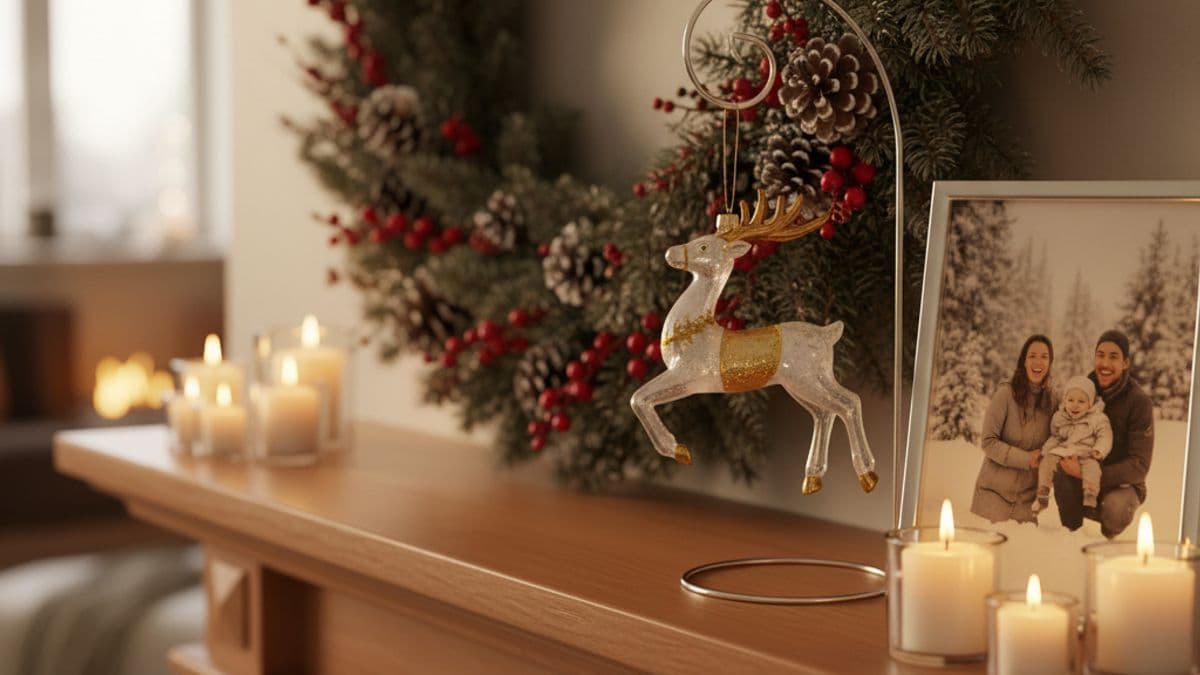
- Light a candle for them — Place a candle in a meaningful spot and light it during dinner, gift opening, or at a quiet moment. Name the person it represents. The act is simple and deeply comforting.
- Hang a special ornament — Dedicate an ornament to their memory. It can be a photo ornament, one that belonged to them, or a new one chosen to represent who they were.
- Set a place at the table — An empty plate, a flower, or a photo at their usual spot acknowledges their presence in the family even though they are not physically there.
- Share a favorite memory — Before the meal or during gift opening, invite family members to share one memory of the person. Saying their name out loud keeps them present.
- Play their favorite Christmas song — Or, if you want something even more meaningful, commission a personalized memorial Christmas song that captures who they were and what they meant to the family. Music reaches places that words alone cannot.
Adjusting Traditions
Some traditions may need to change, and that is not a betrayal — it is an adaptation:
- Modify rather than eliminate — If they always made the Christmas cookies, ask another family member to take over. The tradition continues in a new way that honors the original.
- Create a new tradition in their honor — Donate to a cause they cared about. Volunteer at a place they supported. Do something kind in their name. Our guide to meaningful Christmas traditions has ideas for building new rituals that honor the past while making room for the future.
- Simplify if needed — If a full Christmas celebration feels like too much, scale back. A quiet dinner with close family is enough. There is no minimum level of festivity required.
- Change the location — If celebrating in the same house is too painful, try a different setting. A restaurant, a relative's home, or even a trip away can create distance from the hardest triggers.
Helping Children Through It
Children grieve differently than adults, and Christmas can amplify their confusion and sadness:
- Be honest at their level — Use simple, direct language. "We miss Grandma, and it is okay to feel sad. We can be sad and still have a nice Christmas."
- Include them in memorial gestures — Let them light the candle, hang the ornament, or draw a picture for the person who is gone. Participation helps them process.
- Do not force happiness — If a child is quiet or tearful, do not push them to be festive. Sit with them. Let them feel what they feel.
- Maintain some normalcy — While adjustments are fine, keeping some familiar Christmas morning traditions intact gives children a sense of stability during an unstable time.
Supporting Someone Else Who Is Grieving
If someone in your life is facing their first Christmas after a loss:
- Say their name — Do not avoid mentioning the person who died. The grieving person is already thinking about them. Hearing their name spoken with love is comforting, not painful.
- Check in on the hard days — Christmas Eve and Christmas morning are obvious, but the days leading up to them can be just as difficult. A text that says "Thinking of you today" matters more than you know.
- Offer specifics — "Let me bring dinner on the 23rd" is more helpful than "Let me know if you need anything." Grieving people rarely ask for help.
- Give a meaningful gift — A personalized memorial song, a framed photo, a custom ornament, or a letter about the person who is gone. Gifts that acknowledge the loss are more valuable than gifts that try to distract from it.
Finding Light in the Darkness
Christmas after loss will never feel the same as Christmas before. That is not a failure — it is a reflection of how deeply someone mattered. The goal is not to recreate what was. It is to find a way to honor what was while making room for what still is. Light the candle. Say their name. Play their song. And then let yourself have a piece of pie, laugh at a joke, and enjoy the people still sitting around the table. They would want you to. The love you carry for someone who is gone does not disappear when you smile. It just changes shape — and Christmas is a day to let it be whatever shape it needs to be.