The Most Important Rule: Know Your Partner
Before you learn about cuts, settings, or carats, start with the most important factor: the person who will wear this ring every day. Their style, their lifestyle, and their preferences matter more than any industry guideline or trend. A ring that perfectly matches your partner's taste will always outperform a technically "better" ring that does not suit them.
Pay attention to what they already wear. Are they drawn to gold or silver? Minimalist or ornate? Classic or modern? The answers are in their jewelry box, their Pinterest boards, and the things they pause to look at in stores.
Understanding the Four Cs
The traditional framework for evaluating diamonds is the Four Cs: cut, color, clarity, and carat weight. Here is what actually matters in practical terms:
- Cut — This is the most important factor for how a diamond looks. A well-cut diamond sparkles brilliantly, while a poorly cut one looks dull regardless of size. Prioritize cut above everything else.
- Color — Diamonds are graded from D (colorless) to Z (noticeable yellow). For most settings, anything in the G-H range looks colorless to the naked eye and costs significantly less than D-F.
- Clarity — This refers to internal imperfections. Most inclusions are invisible without magnification. VS1 or VS2 clarity diamonds look flawless to the eye.
- Carat — Carat is weight, not size. A well-cut 1-carat diamond can look larger than a poorly cut 1.2-carat. Do not chase numbers at the expense of quality.
Choosing a Ring Style
The style of the ring involves the setting, the band, and the overall design. Here are the most popular options:
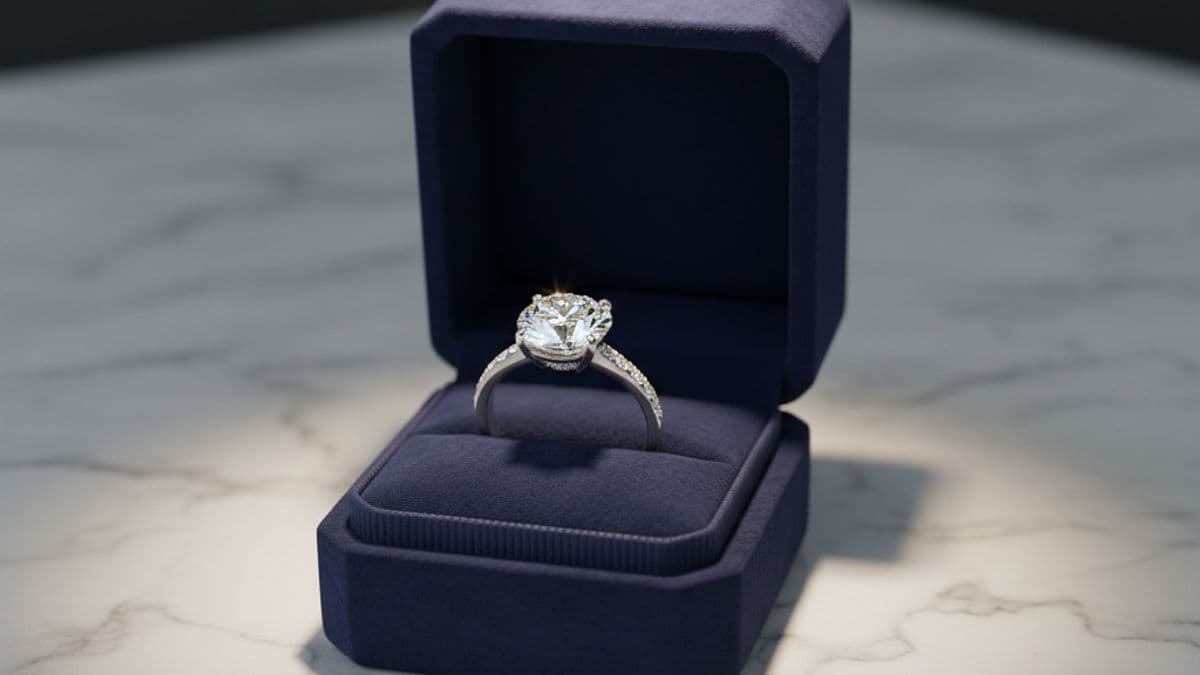
- Solitaire — A single diamond on a simple band. Timeless, elegant, and the most classic choice.
- Halo — A center stone surrounded by a ring of smaller diamonds. This makes the center stone appear larger and adds sparkle.
- Three-stone — Three diamonds representing past, present, and future. Symbolic and visually striking.
- Pave — Small diamonds set along the band, adding sparkle without a large center stone.
- Vintage or antique — For partners who love unique, one-of-a-kind pieces with character and history.
- Minimalist — Clean lines, a thin band, and a modest stone. For the partner who values understated elegance, perfect for a quiet, introvert-friendly proposal.
Setting a Realistic Budget
The old rule about spending two to three months' salary is outdated marketing, not financial advice. Here is a more grounded approach:
- Spend what you can afford comfortably — Starting your engagement in debt is not romantic. Choose a budget that does not compromise your financial stability.
- Know where to invest and where to save — Invest in cut quality and save on color and clarity, where the differences are often invisible.
- Consider lab-grown diamonds — Chemically identical to mined diamonds but typically 30-50% less expensive. An increasingly popular choice.
- Alternative stones — Moissanite, sapphires, and emeralds are beautiful, durable, and more affordable. If your partner is open to alternatives, explore them.
- Do not compare — Your ring is not in competition with anyone else's. It is about your partner and your relationship.
How to Find Their Ring Size
Getting the right ring size without giving away the surprise takes a bit of detective work:
- Borrow a ring they wear on the right finger — Bring it to a jeweler for sizing, then return it before they notice.
- Trace or press a ring into soap — Get an impression of the inner diameter.
- Ask a friend or family member — A trusted person might already know or can find out subtly. If you are already involving family in the proposal, they can help with ring research too.
- When in doubt, go slightly larger — Sizing down is easier and cheaper than sizing up. For the full logistics of planning your proposal around the ring, see our complete proposal planning guide.
Where to Buy
You have more options than ever for purchasing an engagement ring:
- Local jewelers — Personalized service, the ability to see and compare stones in person, and custom design options.
- Online retailers — Companies like Blue Nile and James Allen offer large inventories with detailed imagery and competitive pricing.
- Estate or vintage dealers — For unique, one-of-a-kind rings with history and character.
- Custom design — Work with a jeweler to design something from scratch. This takes more time but results in a truly unique ring.
Pair the Ring With Something Equally Personal
The ring is the symbol. But the proposal is the moment. Elevate both by pairing the ring with a custom proposal song — a song written about your love story that plays as you present the ring and ask the question. Together, the ring she wears and the song she hears create a proposal that is personal from every angle.
Ready to complete the proposal? Create your custom song here.